How the ORLST origin in Biesse CIX files is chosen
Learn how Infurnia picks the ORLST bed origin for each panel, from the Default Machine Origin or the range-based origin table.
Every Biesse CIX file carries an ORLST value (1-9; 5 = bed centre) telling the machine which bed origin to place the workpiece against.
Infurnia fills it from two machine settings.
✓ Checked in the product on 19 October 2026'Default Machine Origin' (default 5) is used for every panel unless overridden.
✓ Checked in the product on 19 October 2026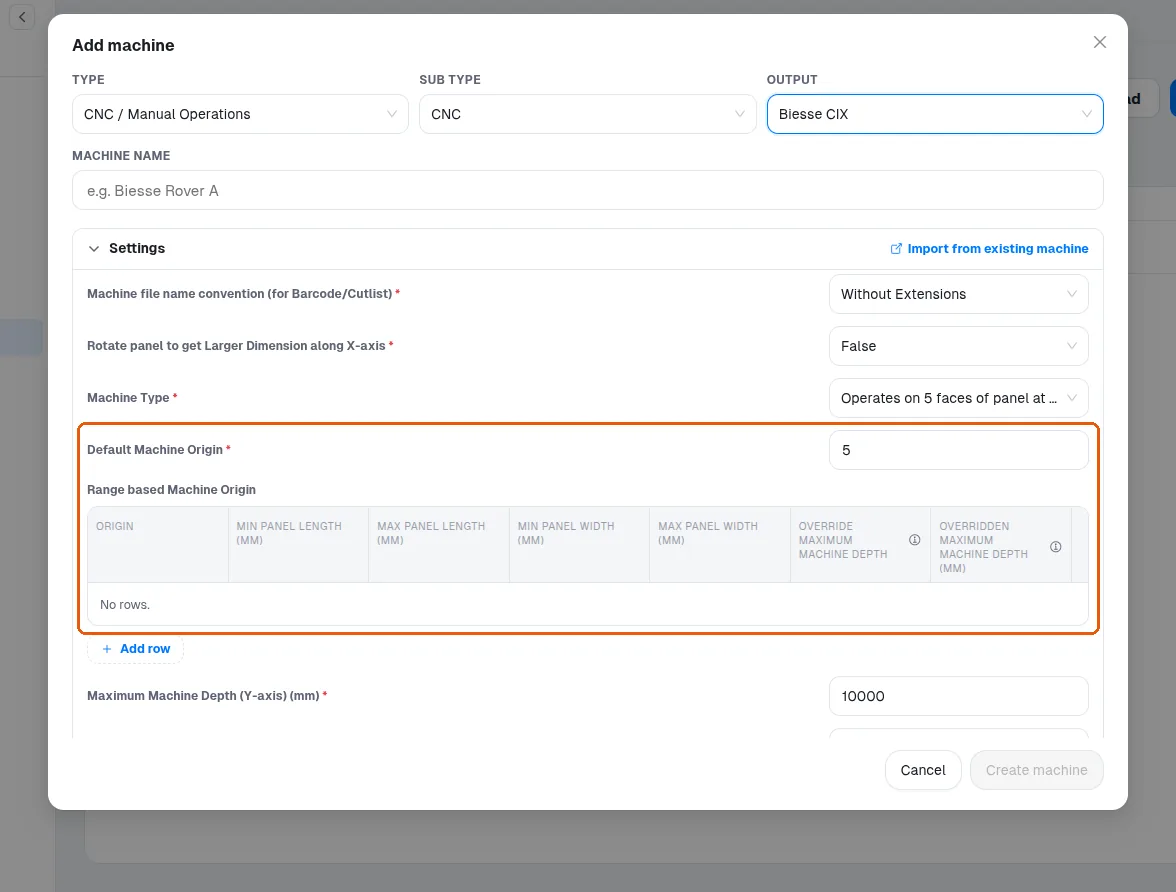
'Range based Machine Origin' is a table where each row defines Min/Max Panel Length and Min/Max Panel Width plus an Origin.
✓ Checked in the product on 19 October 2026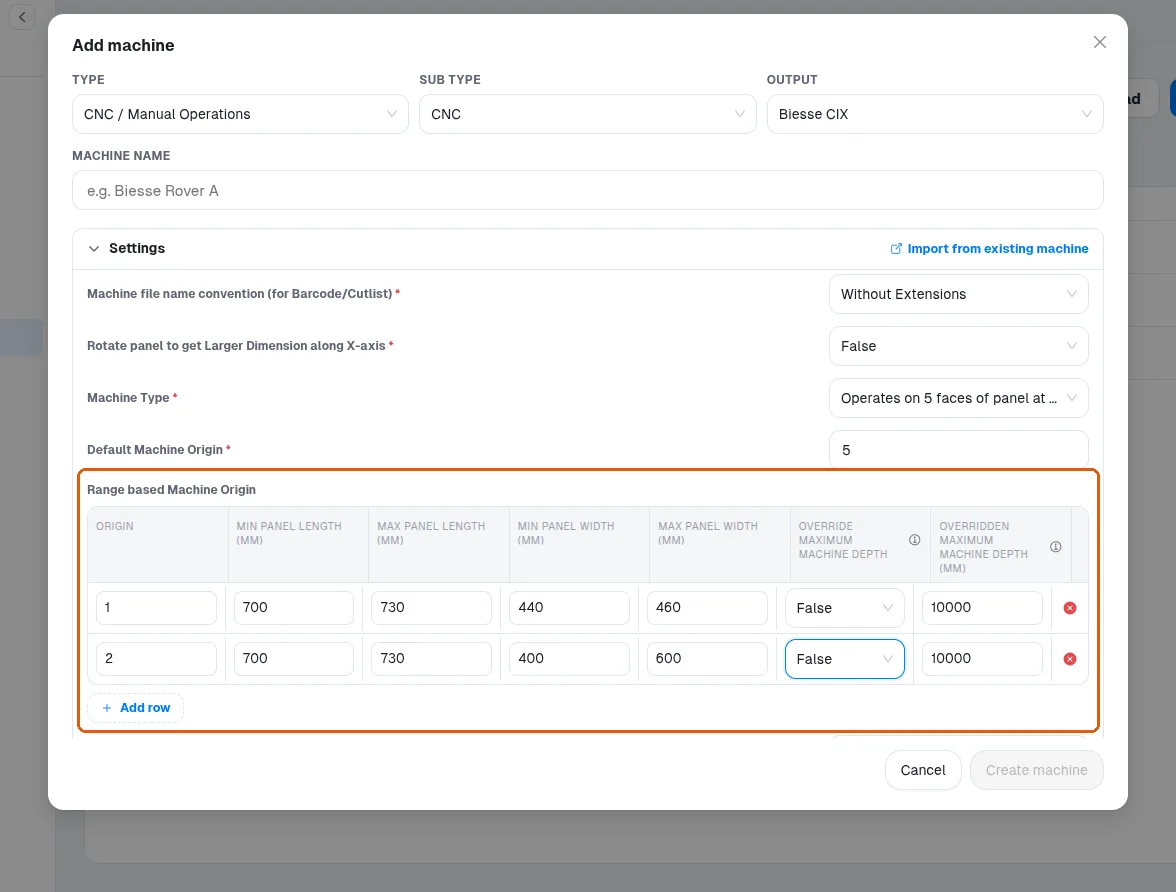
The range-based origin table is available on Biesse CIX machines.
✓ Checked in the product on 19 October 2026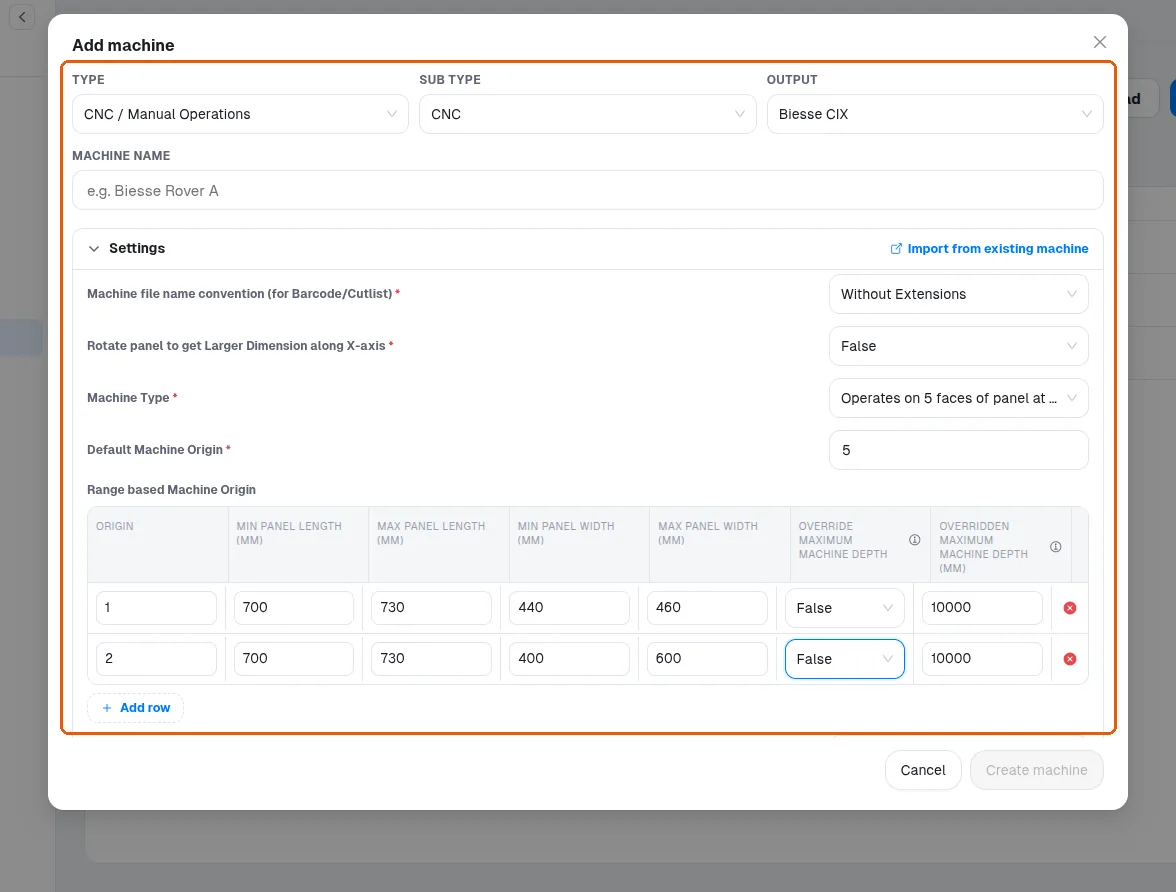
Each row pairs an origin with a minimum and maximum panel length (and width).
✓ Checked in the product on 19 October 2026After the panel's final orientation (post-rotation) is decided, Infurnia finds the first row whose length x width range contains the panel's dimensions and writes that row's origin into the CIX.
✓ Checked in the product on 19 October 2026Matching happens against the panel's dimensions after rotation, so if a panel gets rotated to fit the machine, the rotated length/width decide the row.
✓ Checked in the product on 19 October 2026Matching is first-row-wins, top to bottom - if two rows overlap, the earlier row applies, so reordering rows changes outputs.
✓ Checked in the product on 19 October 2026Range edges have about 0.1 mm tolerance, so a 600.05 mm panel still matches a max of 600.
✓ Checked in the product on 19 October 2026If no row matches, the Default Machine Origin is used.
✓ Checked in the product on 19 October 2026The table only affects Biesse CIX machines.
✓ Checked in the product on 19 October 2026