Bill a furniture unit N times with output quantity
Set an output quantity on top-level furniture so the quotation bills that unit and everything inside it N times without duplicating geometry.
Setting output quantity N > 1 on a top-level furniture unit makes the quotation bill that unit and everything inside it N times without duplicating geometry.
✓ Checked in the product on 22 October 2026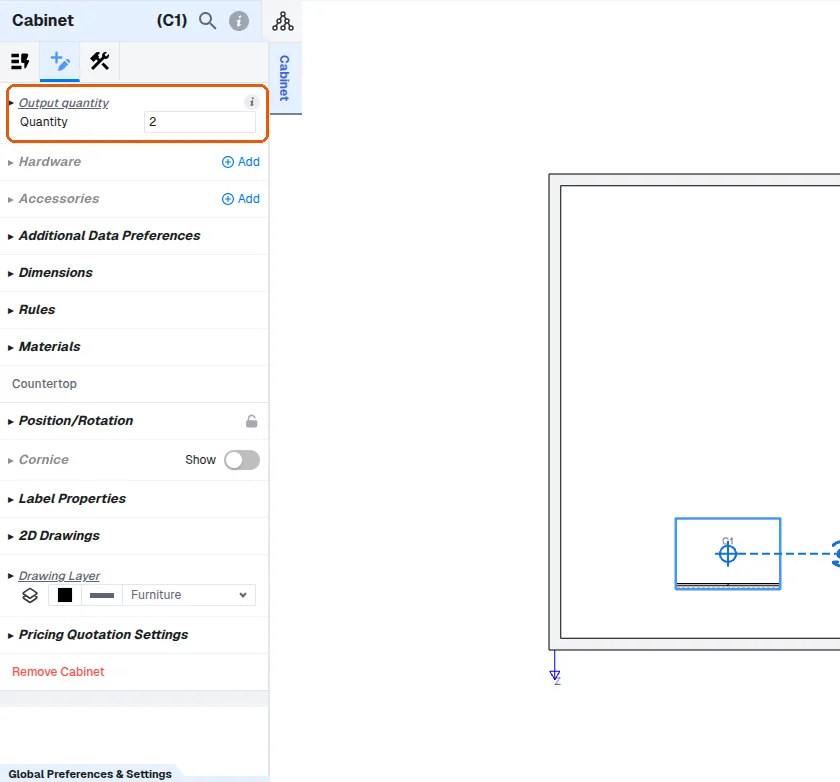
The multiplier lives on the TOP-LEVEL furniture (setting it anywhere else has no quotation effect).
✓ Checked in the product on 22 October 2026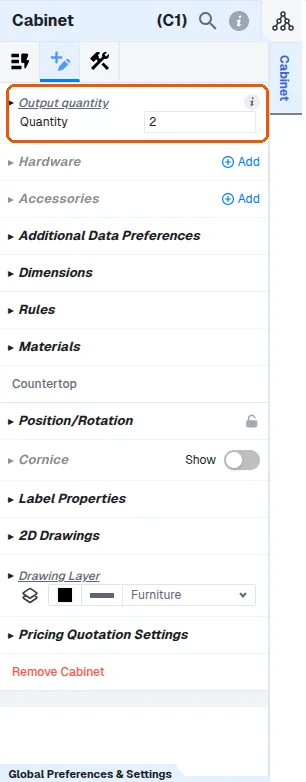
The multiplication happens when rows are collected, per pricing basis: per-unit rows get quantity x N, per-area rows get area x N, per-length rows get length x N.
Per-set rows are first converted to their procurement basis (area or length) and then multiplied, so set rounding is computed on the N-fold consumption pooled together with every other use of that SKU in the design — which can make N cabinets cheaper per cabinet than N separate designs, because set round-up happens once.
Panel rows and rows whose SKU is bin-packed are instead expanded into one row per copy, so each copy is priced from its own geometry.
The furniture's own row shows quantity N and its price multiplies accordingly (the cabinet row price is its constituents' sum times N).
✓ Checked in the product on 22 October 2026A row's quantity only multiplies if it had a positive quantity to begin with.