How the selling price is computed from price, margin and tax
Learn how base price, margin and tax combine into the quoted selling price and why margin is a share of the selling price.
Every price row on a SKU carries: price (base/cost), tax percent, margin percent, display_unit, discount with discount_type ('percentage' or 'absolute'), optional discount caps, and additional_properties. Defaults when unset: tax 0, margin 0, discount 0 (percentage), max_percentage_discount 100, absolute cap disabled. Rows that inherit their price from another price row hide the inherited margin: the margin is folded into the displayed base/cost and the margin field is shown as 0 (display only — the underlying price is unchanged). The quotation selling price is computed in the design core as price / (1 - margin/100) * (1 + tax/100): margin is treated as a percentage OF THE SELLING PRICE (gross margin), not a markup on cost — 20% margin on a 100 base gives 125 before tax, not 120, and margin approaching 100 blows the price up. Tax is applied after margin. Discount is then shown against the resulting price (absolute value, or percent of price). The Price Settings 'selling price' column always shows the final after-tax price even when the org uses separate-tax quotations (tax appears as its own column there). For inherited-price rows the base/cost shown alongside it includes the inherited margin, and the margin column reads 0. When a client reports 'the quoted price is higher than base plus margin percent', this margin-on-selling-price formula is almost always the explanation.
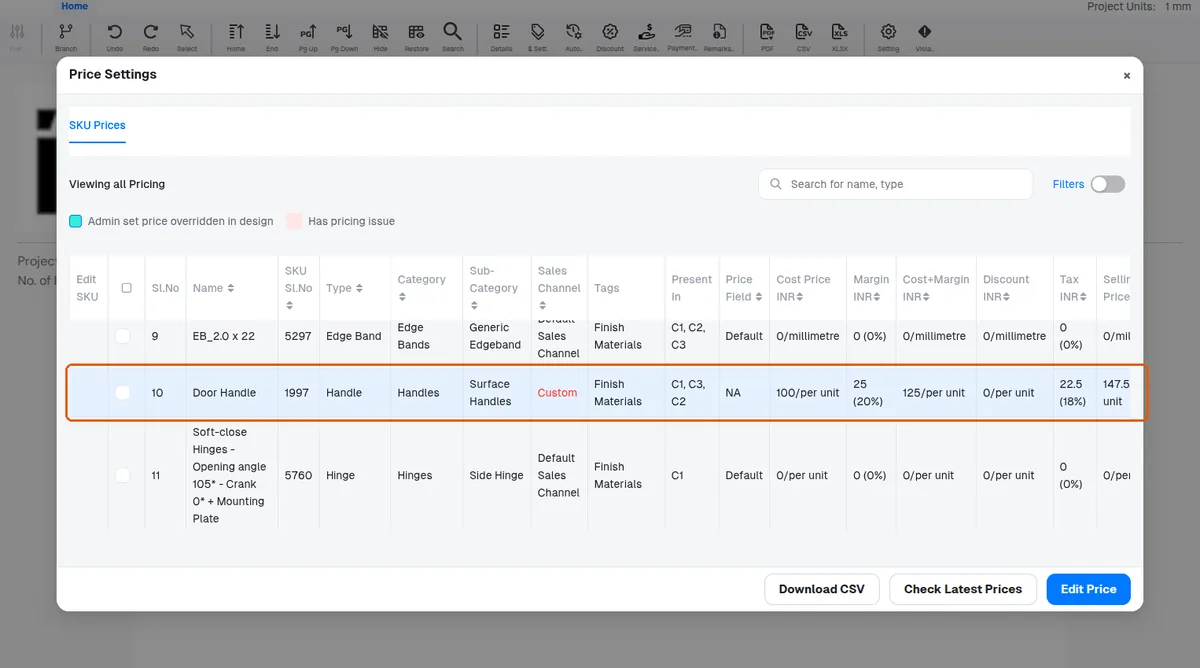
Prices entered on catalogue SKUs are treated as pre-tax base values.
Tax is applied on top automatically, so the quoted figure already includes the applicable tax unless the separate-tax quotation preference is switched on.